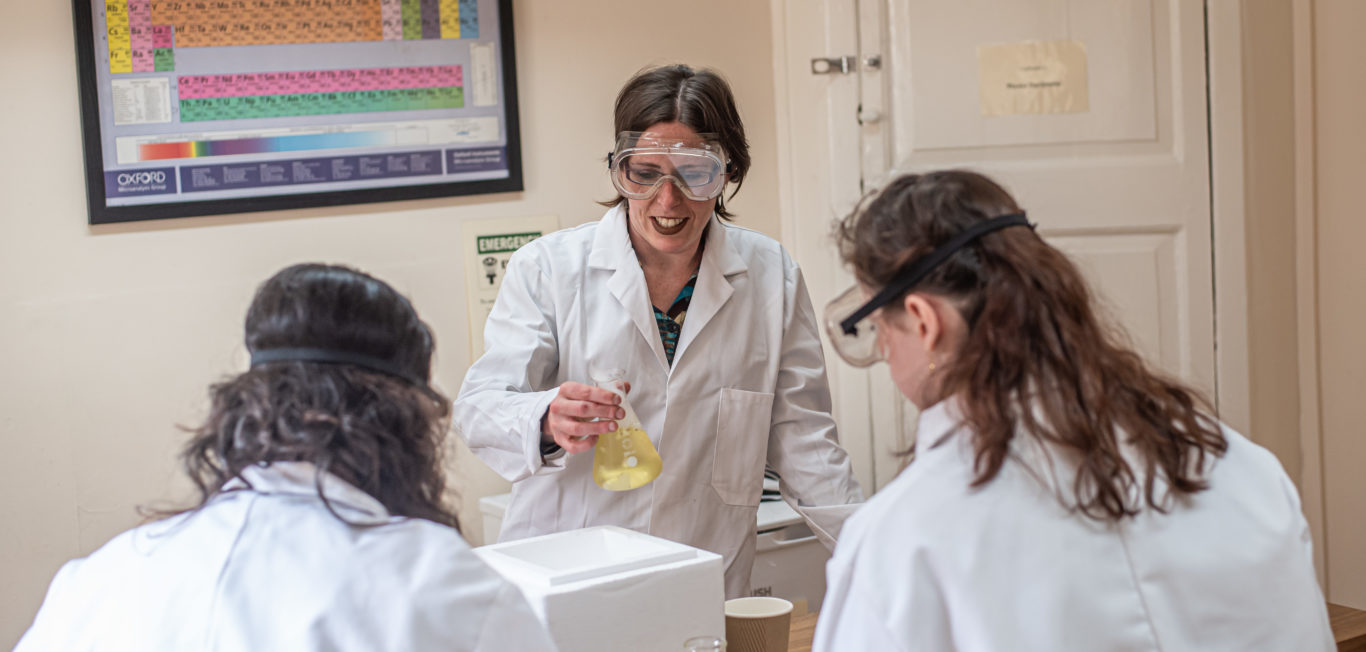

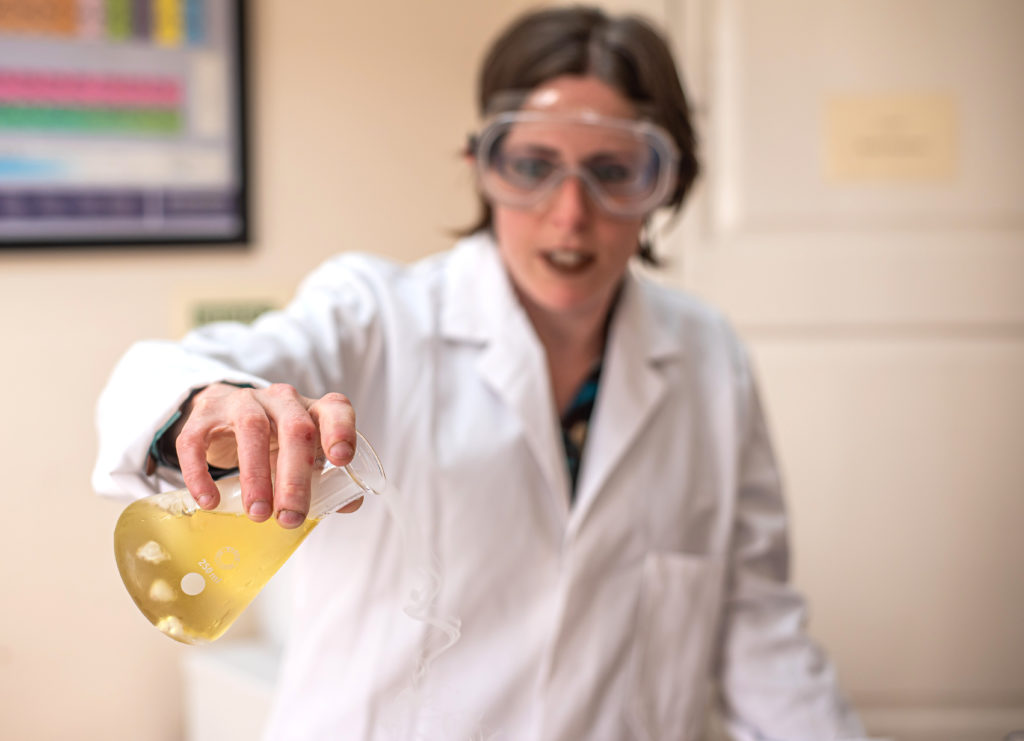
With renowned expertise, Greene’s College Oxford offers science practical endorsement courses for A levels
Most examination boards, such as AQA, OCR and Edexcel, require students to complete a combination of assessed practicals, and written work.
At Greene’s, we ensure that our practicals are engaging and will help you to achieve your A level grades, preparing you for the Sciences at university, whilst exploring the processes that shape our world.
You will have the opportunity to gain a solid foundation in practical work, acquiring transferable skills useful in your further study and beyond. Success on these intensive courses requires pre-course preparation.
Find more information on structure & content.
Our courses are suitable for anyone studying an A level science, in particular:
We also offer science practicals for GCSE students.
With a Greene’s A level science practical course, you can:
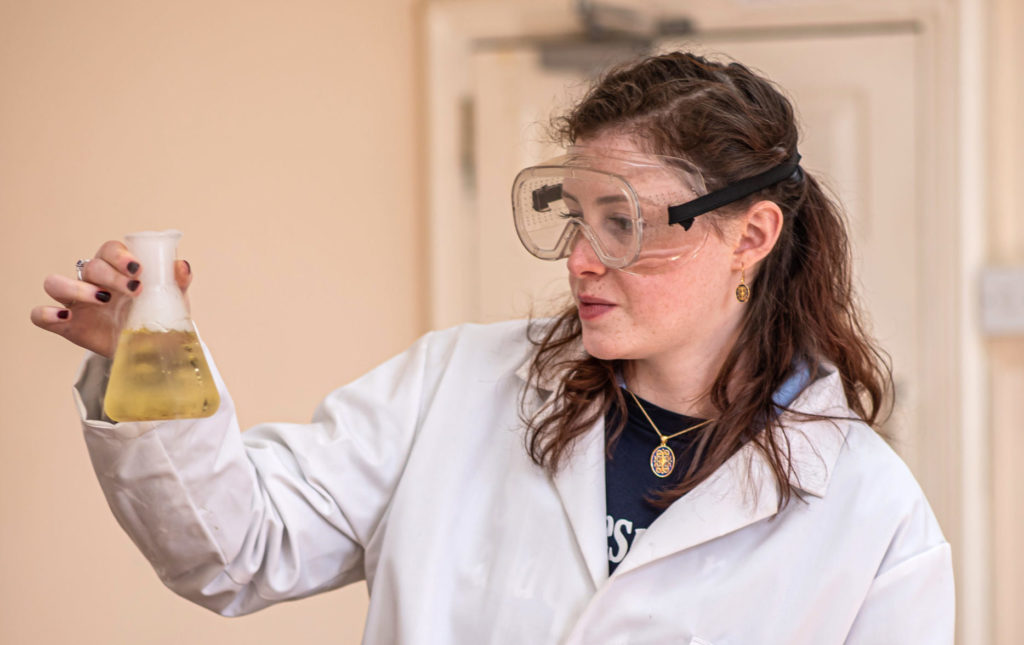
The Greene’s A level science practical courses are for
If in doubt about which offer to choose, reach out to our friendly exams team at examsoffice@greenes.org.uk.
The year 1 and year 2 courses can be taken consecutively for those wishing to complete the practical endorsement in one year.
| Summary description | Start date | Fee | |
|---|---|---|---|
| 2-day Foundation Practical intensive course | The Foundation Practical course offers students the opportunity to develop essential practical skills that they will require to pass the endorsement without the pressure of assessment. Skills achieved will, however, be transferrable to the Endorsement, if you take it at Greene's, meaning you may already have achieved some assessment points. | Physics: October half-term 2025. Chemistry: February half-term 2026. Biology: February half-term 2026. | £780 (per subject) |
| Intensive A level practical endorsement course | Pre-course preparation and assessment followed by twelve laboratory sessions over six consecutive days. Fee is per subject. | Physics: 16th to 21st February 2026 inclusive. Biology: 16th to 11th April 2026. Chemistry I: 13th to 18th April 2026. Chemistry II/Physics II: 29th June to 3rd July 2026. Biology II: 5th to 10th July 2026. | £1,975 (per subject) |
| Intensive CAIE Physics course | An individualised, day-long preparatory course for CAIE Physics students in our lab in Oxford during Hilary term, before Trinity exams start. Fee is per subject. | Contact us to arrange your individual lab practice. | £835 (per subject) |
| Weekly A level practical course | Pre-course preparation and assessment followed by twelve weekly half-day laboratory sessions. Fee is per subject. | Weeks commencing January 4th - April 1st 2026 (excluding week starting 16th February). Physics: Friday mornings (9:30-12:30). Biology: Sunday mornings (9:30-12:30). Chemistry: Saturday mornings (9:30-12:30). | £1,975 (per subject) |
To join the 2025/2026 and 2026/2027 intensive A level practical endorsement Spring and Summer courses is please contact the Exams Office.
The course pricing (JCQ A level Practical Endorsement Course) is inclusive of examination fees per chosen subject i.e. if you choose to take the Physics Science Practicals with us, you will not need to pay again for the associated non-practical A level papers.
After this date, late entry may be possible at the discretion of Greene’s. Additional late entry fees may apply and your chances of successfully completing the endorsement may be affected by the limited preparation time. Course fees do not include examination entry fees. We hope our FAQ section will answer most of your questions about A level science practicals at Greene’s; for any other questions please contact examsofficer@greenes.org.uk.
The above fees currently do not include VAT. All listed fees are subject to additional VAT costs.

We are recognised by the OCR examination board as a science practical case study. Read more about our cherished history with OCR below.
science practical case study
100% reported that the small group working experience was supportive and productive.
100% of students felt that the course enabled them to develop their abilities as an independent
learner.
91% would recommend Greene’s to another student.
100% of students felt that they were provided with sufficient guidance across assessment, theory, and practical activity.
90% of students felt they learnt to perform independent laboratory work safely and competently.
73% felt they could also perform it confidently.
| Practical | Contents |
| Practical 1:
An investigation into the water potential of potato |
Water will move by osmosis from an area of high water potential to an area of low water potential across a partially permeable membrane. Using solutions of different sucrose concentration the water potential of a potato can be determined.
|
| Practical 2:
Effect of substrate concentration on the rate of an enzyme catalysed reaction |
This is an investigation into how changing the concentration of hydrogen peroxide (the substrate) affects the rate of a reaction controlled by the enzyme catalase. Yeast is used as a source of catalase.
|
| Practical 3:
Dissection of stem |
In this activity, you will make thin sections of plant tissue, stain them and view them under the microscope. You will be able to identify different differentiated cells as well as practising your dissection and microscopy skills. In a long, thin specimen, such as a stem, transverse sections are made by cutting perpendicularly across. Longitudinal sections are made by cutting along the line of the specimen. |
| Practical 4:
Studying mitosis in a plant root tip |
Preparation of stained squashes of cells from plant root tips; set up and use of and optical microscope to identify the stages of mitosis in these stained squashes and calculation of a mitotic index. |
| Practical 5:
The comparing the effectiveness of antimicrobial substances on bacterial growth |
Antibiotics can be used to treat a bacterial infection. They work by killing the bacteria or inhibiting their growth. Plants are susceptible to infection by bacteria and fungi; they produce antimicrobial compounds to prevent infection. Several plants are known to, or thought to, destroy or inhibit the growth of certain bacteria. You will investigate whether a plant extract contains antimicrobial chemicals as well as how effective they are compared an antibiotic at the inhibiting growth of Bacillus subtilis on agar plates. |
| Practical 6:
The effect of temperature on membrane permeability |
Beetroot cells contain the purple pigment, betalain. This experiment investigates the effect of temperature on membrane structure by considering the leakage of betalain from the beetroot cells over a range of temperatures. |
| Practical 7:
Using thin layer chromatography to separate photosynthetic pigments |
In this activity you will use thin layer chromatography to separate photosynthetic pigments extracted from plant tissues. Based on the distances moved by the pigments you will be able to identify the different pigments present. You will compare chromatographs of leaves from two different plant species. |
|
Practical 8: Effect of an environmental factor on the distribution of a plant species |
In this investigation, you are going to measure the distribution of named plant species in two different areas in a lawn which differ terms of a named abiotic environmental factor.
You will analyse your result by means of statistical test performed on appropriate software. |
| Practical 9:
a. Determining glucose concentration b. Qualitatively and semi-quantitatively identifying biological molecules |
A quantitative test tells us not only whether a particular substance is present, but at what concentration. Testing for reducing sugars such as glucose with Benedict’s reagent, produces a colour change that can be used as a simple qualitative or semi-quantitative test. By measuring the colour change with a colorimeter, we can transform this into a fully quantitative test. In the first part of this investigation, you will use this quantitative test to determine the concentration of a mock urine sample. |
| Practical 10:
Investigation into the rate of dehydrogenase activity in extracts of chloroplasts |
In this investigation you will use a chloroplast suspension and DCPIP to monitor the rate of dehydrogenase activity. DCPIP goes from blue to colourless when it accepts electrons released by the chlorophyll. |
| Practical 11:
Investigation into rate of respiration in Saccharomyces cerevisiae |
Yeast is a single-celled fungus. It can respire aerobically and anaerobically. During aerobic respiration, the transport of electrons is linked to the synthesis of ATP. These electrons can be accepted by methylene blue, a dye. When methylene blue accepts electrons, it changes from blue to colourless. Respiration rate in yeast is affected by type of substrate (glucose, sucrose etc.). This is an opportunity to design a short experiment of your own to investigate the effect of different substrates (sugars) on respiration rate in yeast. |
|
Practical 12: Investigating responses in invertebrates to environmental conditions |
You will carry out an investigation into the effect of environmental variable on the movement of an animal. Using choice chambers, you will investigate responses in woodlice to light/dark and humid/dry conditions. |
| Practical | Contents |
| Practical 1:
Determination of concentration of hydrochloric acid |
For this Practical Activity, you will make up a standard solution of sodium hydrogencarbonate, and titrate this against a solution of hydrochloric acid to determine the concentration of the acid. |
|
Practical 2a: Determining relative atomic mass of Magnesium a. Practical 2b: b. Measuring enthalpy change |
Magnesium is a reactive Group 2 metal that readily reacts with an excess of aqueous sulphuric acid, evolving hydrogen gas. By collecting and accurately measuring the volume of gas, and the mass of magnesium used, the relative atomic mass of magnesium can be determined. You will also carry out a thermochemical experiment to determine the enthalpy change of this reaction. |
| Practical 3:
Investigating the effect of temperature on the rate of a reaction |
Sodium thiosulfate reacts with hydrochloric acid according to the equation: Na2S2O3(aq) + 2HCl(aq) → 2NaCl(aq) + SO2(g) + S(s).
The reaction produces a precipitate of sulfur. The rate of this reaction can be monitored by measuring the time taken for a fixed amount of sulfur to be produced. An easy method to do this is by timing how long it takes for a cross, marked under the bottom of the reaction vessel, to disappear as it is obscured by the sulfur precipitate. |
| Practical 4a:
Preparation and purification of cyclohexene Practical 4b: a. Tests for organic functional groups |
In this practical, you will prepare an organic liquid and separate it by distillation. You will then carry out tests on a number of organic functional groups. |
| Practical 5:
Chemical tests to identify of inorganic cations and anions |
In this practical, you will perform a series of tests to identify various cations, anions and gases, and use these results to identify unknown substances and write equations that describe the reactions taking place. |
| Practical 6:
Preparation and the purification of Ethyl Ethanoate |
In this practical, the ester ethyl ethanoate is prepared and purified by distillation. |
| Practical 7:
Measuring the rate of reaction by a continuous monitoring method |
You will investigate the rate of the reaction between calcium carbonate and hydrochloric acid. You will do this by continuously monitoring the reaction by gas collection, as a result of evolution of carbon dioxide. The volume and concentration of the hydrochloric acid used are chosen so that the acid is virtually all used up (the CaCO3 is in excess). We can investigate the order with respect to the acid. |
| Practical 8a:
a. Synthesis of Aspirin b. Practical 8b: c. Analysis of purity of aspirin samples by thin-layer chromatography |
In this practical, you will synthesise, purify and recrystallise aspirin, performing a melting point test to ensure good purity. You will analyse the purity of prepared aspirin via thin-layer chromatography. |
| Practical 9:
Electrochemical Cells |
In this practical, you will prepare solutions and set up a series of electrochemical cells. You will then use comparative calculations to determine the E˚cell of a series of reactions. |
| Practical 10:
Chemical tests to identify transition metal ions in aqueous solutions |
Most transition metal compounds are coloured. Some of them are used as dyes and pigments. A dye is a soluble coloured compound. A pigment is an insoluble coloured compound. Both dyes and pigments have to be resistant to chemical change. |
| Practical 11:
Constructing titration curves to determining the Ka of a weak acid |
In this practical, you will construct titration curves for a weak acid with a strong base. From these curves, you will calculate pKa(s) for the weak acid, and use these to identify the weak acid. As an extension, you may also choose to titrate a strong acid against a weak base. You will also use the titration curve to determine the concentration of the weak acid (and weak base). |
| Practical 12:
Iodine Clock – Determining orders of reaction by an initial rates method |
In this practical, you will carry out the iodine clock reaction. You will need to plan and carry out an experiment to find the order of this reaction with respect to I–(aq) ions, varying the amounts of I–(aq) ions and measuring the time taken for each reaction. Through your subsequent analysis, you will determine the rate of reaction and its equation.
|
| Practical | Contents |
| Practical 1:
Investigation into the variation of the frequency of stationary waves on a string |
In the practical session you will generate and measure waves using vibration transducer and analyse your results graphically. |
|
Practical 2: Investigating interference with Young’s slit and diffraction with a diffraction grating |
In the practical session, you will use appropriate analogue apparatus to record a range of measurements and then use a laser or a light source to investigate characteristics of light, including interference and diffraction |
| Practical 3:
Determination of g by a free-fall method |
In this laboratory session, you will use suvat equations, uncertainties, and the use of light gates etc. for measurement. |
| Practical 4:
Determination of the Young Modulus by a simple method |
You will use appropriate analogue apparatus to record a range of measurements (to include length/distance) and use methods to increase accuracy of measurements including vernier scales. |
| Practical 5:
Determination of resistivity of a wire |
You will need design and construct your own circuits to measure resistance, resistivity, uncertainties and use appropriate analogue and digital apparatus to record a range of measurements. |
| Practical 6:
Investigation of the e.m.f. and internal resistance of electric cells and batteries |
You will also to need design and construct your own circuits, to collect results leading to a graphical analysis for internal resistance. |
| Practical 7:
Investigating simple harmonic motion |
In this laboratory session, you will cover simple harmonic motion both for a pendulum and a mass on a spring. You will then carry out experiments which lead to graphical analysis to compare your results with the theoretical values. |
| Practical 8:
Investigation of Boyle’s law and Charles’ law for a gas |
In this laboratory session, you will explore the Kinetic theory and Gas Laws. You will then carry out experiments which lead to graphical analysis to see how closely your results follow these Laws and also obtain a value of absolute zero of temperature.
|
| Practical 9:
Investigation of the charge and discharge of capacitors |
In this laboratory session, you will explore capacitors, exponentials and the equations for discharge through a resistor. You will then carry out experiments which lead to graphical analysis using computer software to see how closely your results follow these Laws and obtain a value of the capacitance. The second part of this investigation requires you to produce a graph for the charging of a capacitor and to analyse this graph. |
| Practical 10:
Investigating relationships between magnetic flux density, current and wire length
|
In this laboratory session, you will explore magnetic fields, magnetic flux density and the equation for force on a wire in a magnetic field. You will then carry out experiments which lead to graphical analysis to find the magnetic flux density between the magnets. |
| Practical 11:
Investigating magnetic flux linkage using a search coil and an oscilloscope |
In this laboratory session, you will explore magnetic fields, magnetic flux linkage and Faraday’s Law. You will then carry out experiments, which lead to graphical analysis to test the mathematical relationships. |
| Practical 12:
Investigation of the inverse-square law for gamma rays |
Here, you will use a thoriated gas mantle to study radiation. You will carry out an experiment, which leads to graphical analysis using computer software to see how closely your results follow this law. The second part of this investigation uses the same analysis for light emitted from a lamp. |
FAQs
For JCQ examination boards in England (AQA, Edexcel and OCR) the assessment of practical skills in Biology, Chemistry, Geology and Physics is assessed in two ways:
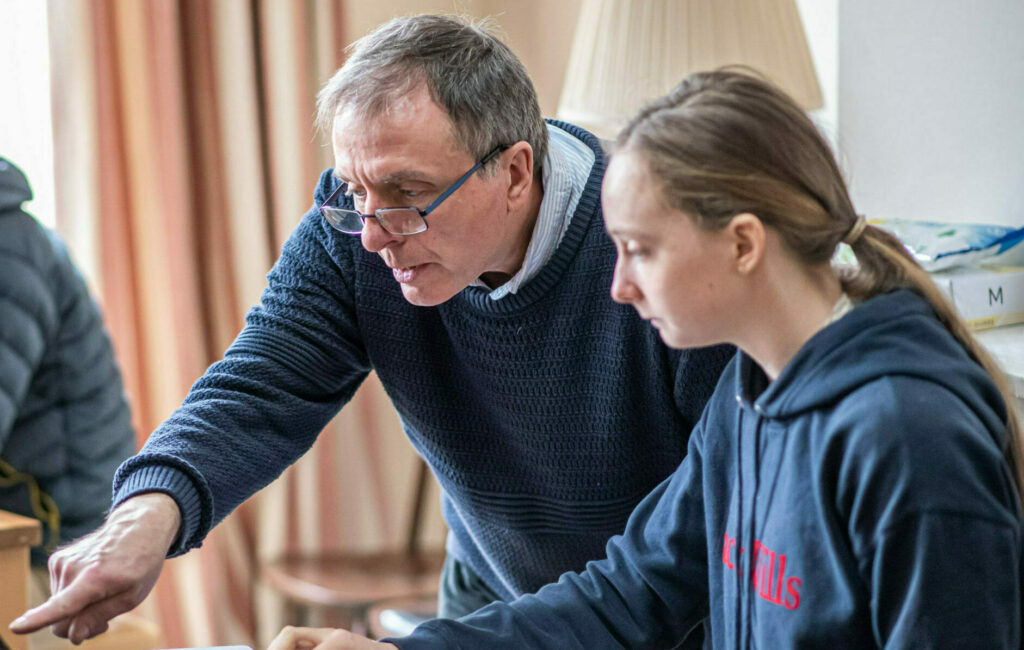
Greene’s tutors monitor you in the laboratory and check your books, discuss your understanding with you, and check that you can repeat skills that are new to you and have been taught during the Endorsement. To pass, you must perform 12 laboratory sessions, tick off a list of apparatus and techniques performed, e.g. setting up electrochemical cells, and demonstrate competencies across the Common Practical Assessment Criteria (CPACs).
The Common Practical Assessment Criteria (CPACs) ask you to:
These differ across the sciences, but, for example, include:
There are about 12 practical apparatuses or techniques to complete.
Yes! Your tutor will offer you guidance, teaching, and identify skills you need to demonstrate or activities you must perform to meet the Endorsement criteria. However, you can still fail to obtain the pass if, for example, you miss 1 of the 12 required practicals, or refuse to handle a living animal in Biology.
In the examination, there are questions based on practical skills and knowledge, contributing a minimum of 15% of your marks. Practical skills allow you to contextualise what is sometimes extremely abstract content, on a scale of molecules and atoms that are invisible to the eye. It directly relates to examined content, and can empower students to think in innovative, flexible ways when solving problems.
Many universities require the Practical Endorsement as part of their admissions criteria for a wide range of courses.
‘We will therefore require applicants who are offering one or more of these reformed A level science subjects in England to pass the practical skills assessment in addition to achieving the required grade(s) in the written examination(s).’ University of Reading
‘Practical skills are a crucial part of science education and the University of Sheffield will expect students to pass the practical element of any science A Level taken.’ University of Sheffield.
‘The University of Southampton believes that practical skills in the sciences are integral to a candidate’s understanding and appreciation of these subjects and it will require all applicants offering one or more of these subjects at A level to pass the practical skills assessment in addition to achieving the required grade(s) in the written examination(s).’ University of Southampton
‘If a practical component forms part of any of the A-levels taken, we expect candidates to have taken it and passed.’ University of Oxford
Greene’s recognises that you may be anxious about the level of mathematics required for A Level Practicals, particularly for those who are not taking Maths A Level.
We offer a comprehensive, tailored introduction to maths course for Biologists and Chemists at no additional cost when you take our Intensive Practical Courses.
Running for half of the lunch break, the concepts you need will be covered, and not the ones you don’t: this includes concepts such as scale factors for using a microscope, and converting numbers in Excel. To sign up, just let us know you would like this additional support and we will liaise with you on the day about priority topics.
Statistical analysis is already covered within Biology practicals.
The concepts covered are in line with A Level specifications, although we will also cover use of Excel to perform calculations, which are needed for practical work but not for examinations.
Create your personal prospectus by selecting your interests.
This link will take you to Greene’s International
Proceed